Physical Address
304 North Cardinal St.
Dorchester Center, MA 02124
Physical Address
304 North Cardinal St.
Dorchester Center, MA 02124

Let's Shape The Future
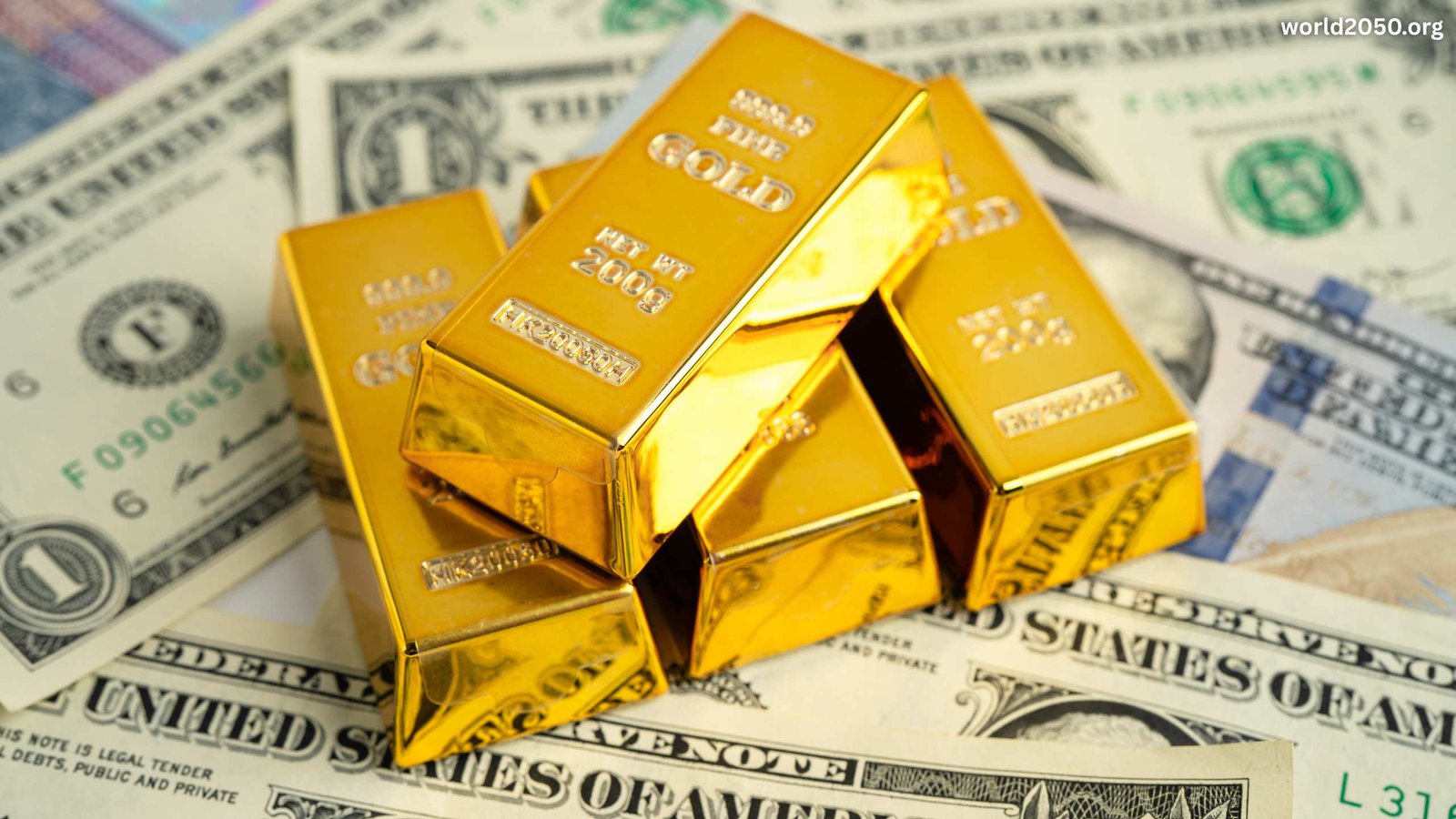
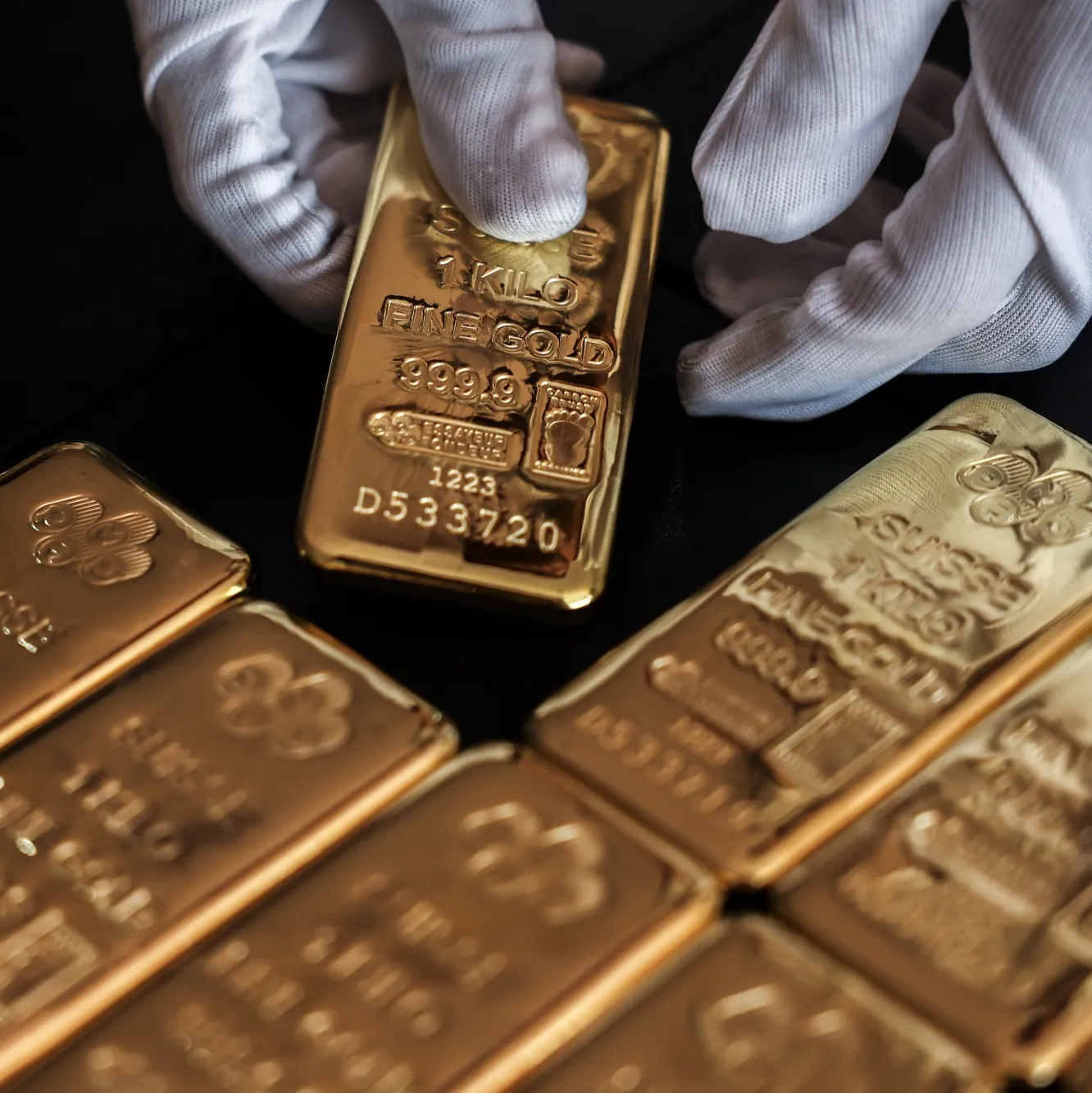
We expect Gold to cross $50,000 per ounce or $1,666 per gram, driven by the combined effects of central bank, consumer, industrial, and portfolio demand.
We expect Gold to cross $50,000 per ounce or $1,666 per gram, driven by the combined effects of central bank, consumer, industrial, and portfolio demand.
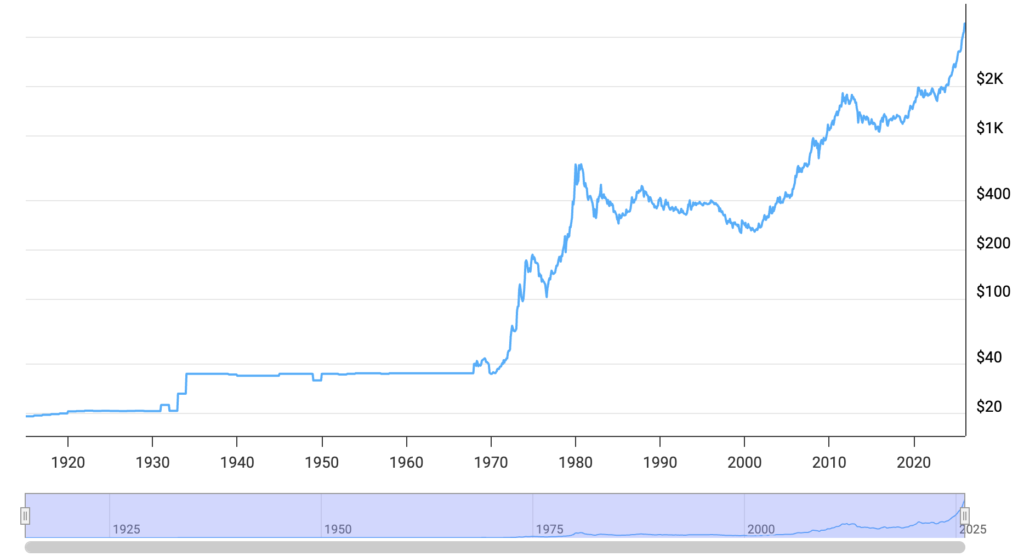
This projection follows the price trajectory of Gold from 2000 to 2026.
Gold has been rising in the last few years due to the dollar crisis in international foreign exchange.
Back in 1975, when the US Dollar was taken off the gold standard, dollars printed and circulated in global economies stopped being gold-backed and became demand-driven fiat currency.
Since then, the value of the dollar has been continually declining. This decline scared global currencies that used to maintain a dollar reserve to back their own currencies, like the Japanese Yen, Chinese Renminbi, Euro, and the Indian Rupee.
These central banks then began purchasing Gold and reducing the amount of U.S. dollars from their reserves.
Consumer demand for Gold has always been high due to its historic rarity and usage as luxury ornaments. Gold ornaments have been a part of several cultures, where they are the main adornments on occasions such as weddings, birth ceremonies, and funerals.
Gold is widely used in several industries for core applications such as:
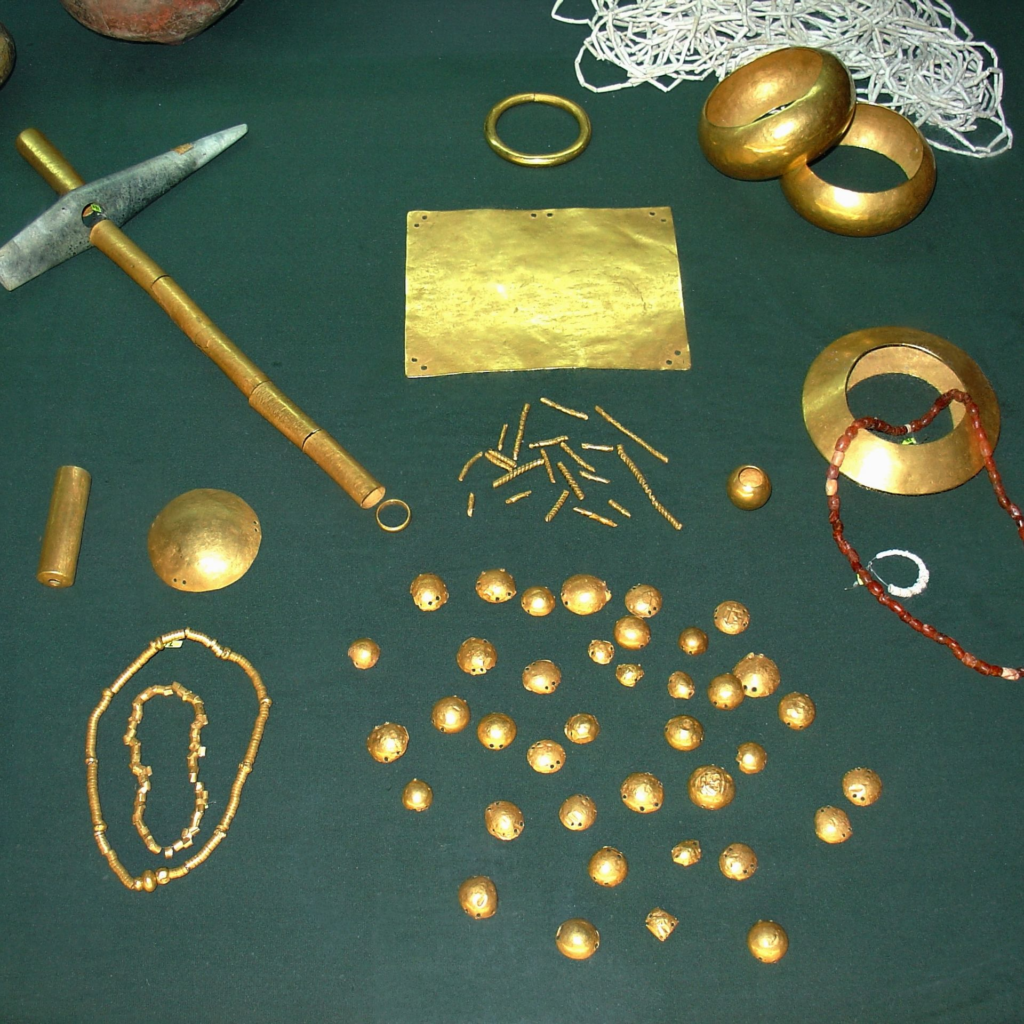
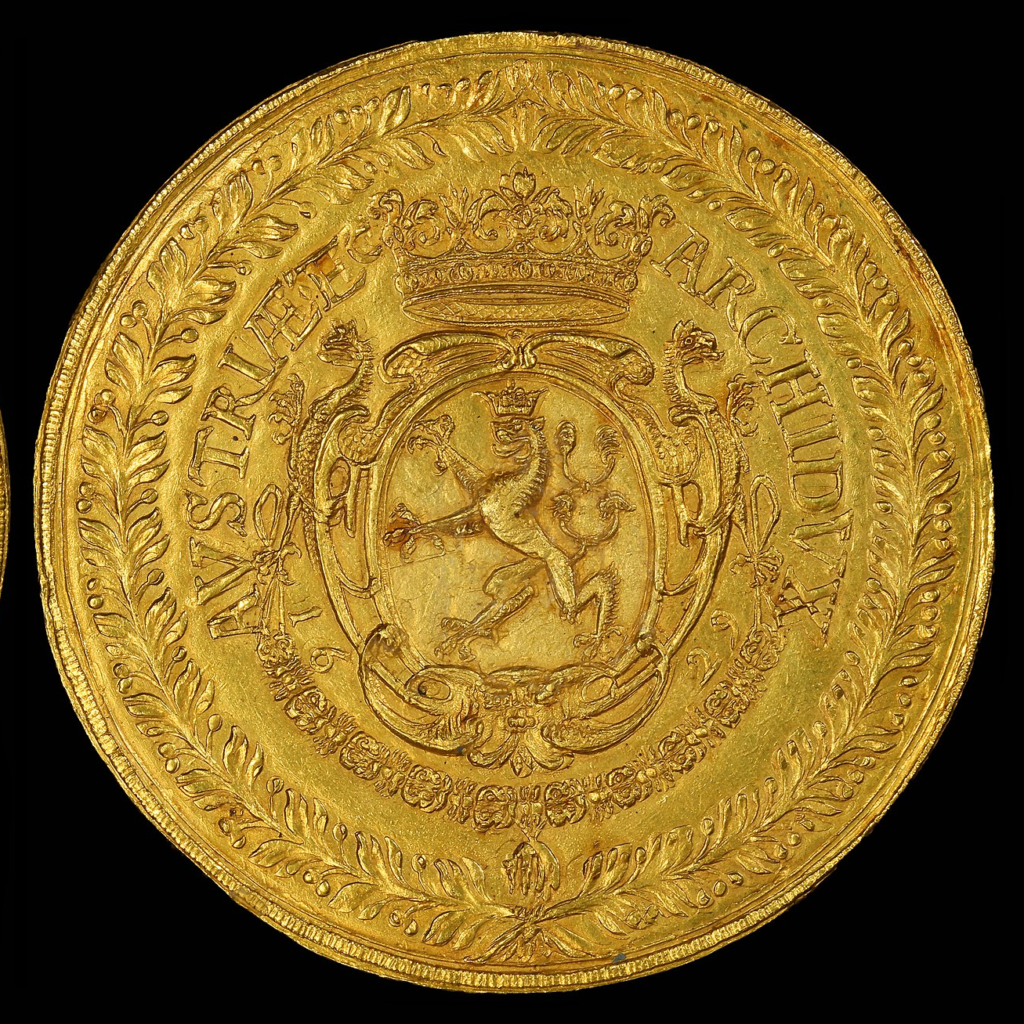
In the ancient world, Gold served as a key currency for trade due to its universal acceptability. Gold Drachmas were invented in ancient Greece, ancient Rome, ancient Sindhu Saraswati Civilization, Egypt, and many other prominent cultures.
Gold remained a principal international currency in the Middle Ages. With the Age of Exploration, a fresh wave of demand emerged. Despite the discovery of Silver, it continued as a principal currency.
In the 20th century, Gold was adopted as a principal reserve asset to issue sovereign currencies. The US Dollar was backed by Gold in 1945, and therefore, the world quickly adopted the US Dollar as a reserve currency.
Further, individual currencies began pegging their currency to the US dollar, which further accelerated Gold demand. By 1975, the US Dollar had to be taken off the Gold standard because the price of Gold made it impossible to back every dollar.
Since then, Gold has been used for partial reserves in central banks, as a hedge against inflation in personal portfolios and financial fund houses.
In the modern era, Gold is primarily used in uncertain times when other financial assets come under pressure. Events such as market uncertainty, global trade crises, and foreign exchange crises drive Gold demand.
By the year 2050, Gold is expected to cross $50,000 per ounce from $5,000 per ounce in 2026. This projection follows Gold’s price trajectory between 2000 ($280 per ounce) and 2026 ($5,000 per ounce).
This demand is based on the following key drivers:
We must understand that the current projection of Gold’s price in 2050 is based on the assumption that economic factors such as market demand, forex rates, and currency values remain the same, which is almost never the case.
The purpose of this article is not to predict the price of Gold by 2050, but to provide a general direction for where the price might be headed.
Our projections indicate that Gold could cross $1000 per gram in 2046.
On an annualized yield basis, Gold has a return rate of 10% per annum for the last 25 years. For a 10-year period, this corresponds to an absolute return of 159%.
World2050 sources information from the internet and does not claim accuracy or actionable intelligence. Please verify information before acting on it.